 Loire Valley Castles Tour
Château D'Ussé: The Sleeping Beauty Castle of the Loire
The Château d'Ussé is the Loire castle linked to the Sleeping Beauty tale, standing above the Indre river at the edge of the Chinon forest. This guide covers its hours by season, ticket prices, the self-guided route with the app, the rooms, dungeon, chapel and gardens, and the two castles nearby. The bookable tours are compared on Loire Valley chateau tours.
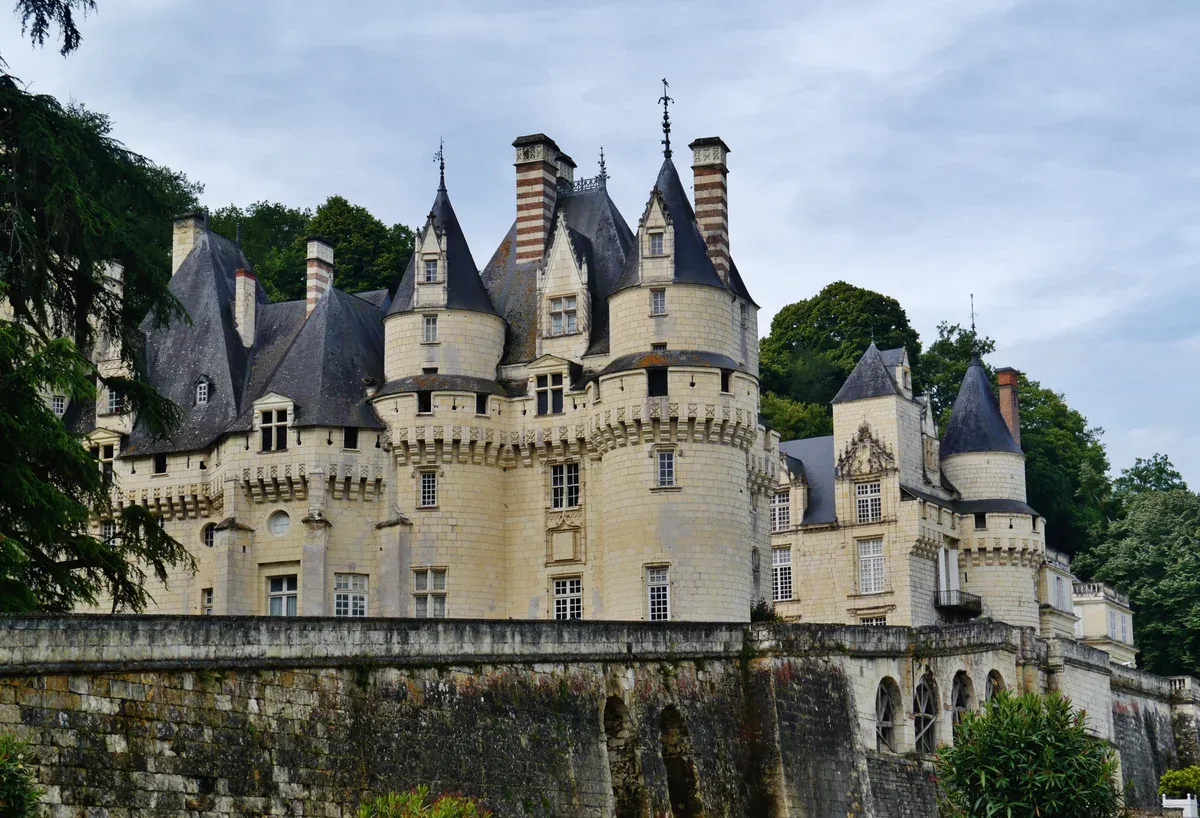
Château d'Ussé with its turrets and chimneys rising above the terrace wall. Photo: Zairon, CC BY-SA 4.0, via Wikimedia Commons
Quick answer Ussé in brief
The Château d'Ussé costs €14.50 for an adult, €7.50 for a child aged 8 to 16, and is free for children under 8. It opens 14 February to 1 November, from 10:00, and closes between 18:00 and 19:00 depending on the season. The visit is self-guided, with an optional app guide sold for €2, and Perrault is said to have had this castle in mind for Sleeping Beauty. The Duke of Blacas and his family still live in part of it.
Key takeaways
- Adults pay €14.50 and last tickets go on sale one hour before closing. Check the season-by-season hours in the visiting section.
- You walk Ussé on your own, from the entrance hall to the dungeon, chapel, gardens, cellars and stables. Follow the route in what to see.
- To pair the area with a guided day, the Villandry and Azay-le-Rideau half-day tour from Tours covers two nearby chateaux in 4 hours for $131.
- Ussé is a private family home with no restaurant on site. For food and logistics, see getting there and nearby, or browse the wider guide to Loire Valley castles.
Visiting the Château D'Ussé: Hours, Tickets and Time
Ussé keeps simple seasonal hours. The table below pulls the practical figures from the castle's own pages.
Hours, Tickets and Practical Details
Ussé opens every day of its season, 14 February to 1 November. There is no annual closing listed inside that window and last tickets are sold one hour before closing. The visit is self-guided throughout, with no guided tours offered. An optional guide on the Wivisites mobile app costs €2 and printed sheets are available in nine languages.
For a DIY day in this part of Touraine, the natural companions are Azay-le-Rideau and Château de Villandry, and a 4-hour guided half day exists: the Villandry and Azay-le-Rideau half-day tour from Tours.
| What | Detail |
|---|---|
| Season | 14 February to 1 November, closed outside those dates |
| Hours to 31 March | 10:00 to 18:00 |
| Hours 1 April to 20 September | 10:00 to 19:00 |
| Hours after 20 September | 10:00 to 18:00 |
| Last entry | Tickets sold until one hour before closing |
| Adult ticket | €14.50 |
| Child ticket | €7.50 for ages 8 to 16, free under 8 |
| Group rate | €11.50 per adult for groups of 20 or more |
| Visit type | Self-guided only, optional Wivisites app guide at €2, sheets in nine languages |
| On site | No restaurant on the estate |
| How long to allow | Not stated |
When to Go and Free Entry
Opening hours stretch latest in summer, 10:00 to 19:00 from 1 April to 20 September, which gives you the longest window for the gardens and the terrace over the Indre. In spring and autumn the doors close at 18:00, so start by mid-afternoon to leave time for the dungeon and stables as well as the château. Because last tickets are sold one hour before closing, the last ticket in high season goes on sale at 18:00.
The only free-entry rule the castle states is for young children: under 8s enter free, and children aged 8 to 16 pay €7.50. Groups of 20 adults or more drop to €11.50 a head. No other free days, no late openings and no picnic rules are stated on the castle's own pages. There is no restaurant on site, so plan to eat before or after the visit. For a longer stay in the region, the guide to where to stay in the Loire Valley covers the main bases, and Loire Valley chateau tours lists guided days that start in Tours and Amboise.
Sources: Château de Chambord, Château de Chenonceau, Blois-Chambord tourist office
What to See, in Visiting Order
Ussé mixes a furnished family home with a medieval dungeon, a Renaissance chapel and gardens above the river. The route below follows the order of the visit as the castle describes it.
Entrance Hall and Guard Room
The visit starts in the entrance hall with its spiral staircase, then moves straight into the Guard Room. This room was the 15th-century entrance to the castle, the point where a drawbridge once let people in from outside. Its most striking feature is the ceiling, painted in trompe-l'oeil marble rather than faced with real stone.
That painted trick is a good reminder of what Ussé is: a home that successive owners kept decorating, not a ruin. Because the visit is self-guided, you set your own pace here, and the €2 Wivisites app guide gives the room-by-room commentary in place of a live guide.
Vauban Salon
The Vauban Salon was refurbished to receive Vauban himself, the great military engineer, when he came to Ussé to visit his daughter. She had married the Marquis de Valentinay, and a pavilion was added to the castle in the 17th century to mark that marriage. The salon today holds 16th-century Brussels tapestries.
The long terrace above the Indre was built by Vauban.
King's Chamber and Marble Room
After the Vauban Salon the self-guided route continues to the King's Chamber and then the Marble room, the last of the furnished state rooms named in the castle's visit order. The château's own pages list these rooms in sequence but give no separate furnishings or dimensions for them, so treat them as the quieter tail of the indoor visit before you step out to the dungeon and gardens. Remember the practical frame: last tickets are sold one hour before closing, and in the 18:00-close shoulder seasons that makes 17:00 your real deadline for reaching the Marble room with time to spare.
The Knights' Dungeon
The octagonal Knights' Dungeon has murder holes at each angle of its octagon and a sentry walk along the top. That sentry walk is now home to scenes from the Sleeping Beauty story, set out along the ramparts. This is the most direct link to the tale: Perrault is said to have had Ussé in mind when he wrote Sleeping Beauty.
Collegiate Chapel of Notre-Dame
The Collegiate Chapel of Notre-Dame is Renaissance in style, and its carved choir stalls are attributed to Jean Goujon.
The French Gardens and Vauban Terrace
The formal French gardens are attributed to Le Nôtre, and they run against a long terrace built by Vauban over the Indre. The Chinon forest edge nearby is where the stronghold was first built. In the summer season, when the castle stays open until 19:00, the terrace is a good place to finish the day.
Orangery and Cedars of Lebanon
The estate has an orangery built in 1664. Two cedars of Lebanon grow nearby, and they have a literary pedigree: they were given by Chateaubriand, who often stayed at Ussé.
The 14th-Century Cellars
Below the château, the cellars were carved out of tuffeau, the soft white limestone that the Loire's buildings are cut from, and they date from the 14th century. The galleries hold a small chapel of Saint Vincent, the patron saint of wine growers.
The Stables and Carriages
The stables display horse-drawn carriages, including a Town Coupé and a Milord, alongside a tack room. In the 18:00-close seasons the ticket desk shuts at 17:00, so late starters have less time for the whole circuit.
Inside Château D’Ussé: Secrets Hidden in a Magical French Chateau!
A visit inside Ussé, the castle tied to the Sleeping Beauty tale. Third-party video by Saving Castles. This site did not shoot it and has no relationship with the creator.
Sleeping Beauty and the Self-Guided Visit
Ussé leans into its link with Perrault's tale, and the visit format is worth knowing before you arrive.
History in Quick Strokes
A stronghold went up around the year 1000, built by Gelduin I on the edge of the Chinon forest. Jean V de Bueil, a supporter of Joan of Arc, reshaped it in the 15th century. In the 17th century a pavilion was added to mark the marriage of Vauban's daughter to the Marquis de Valentinay, and Vauban himself built the long terrace over the Indre.
If you are planning a wider trip, the Loire Valley itinerary page puts Ussé in context.
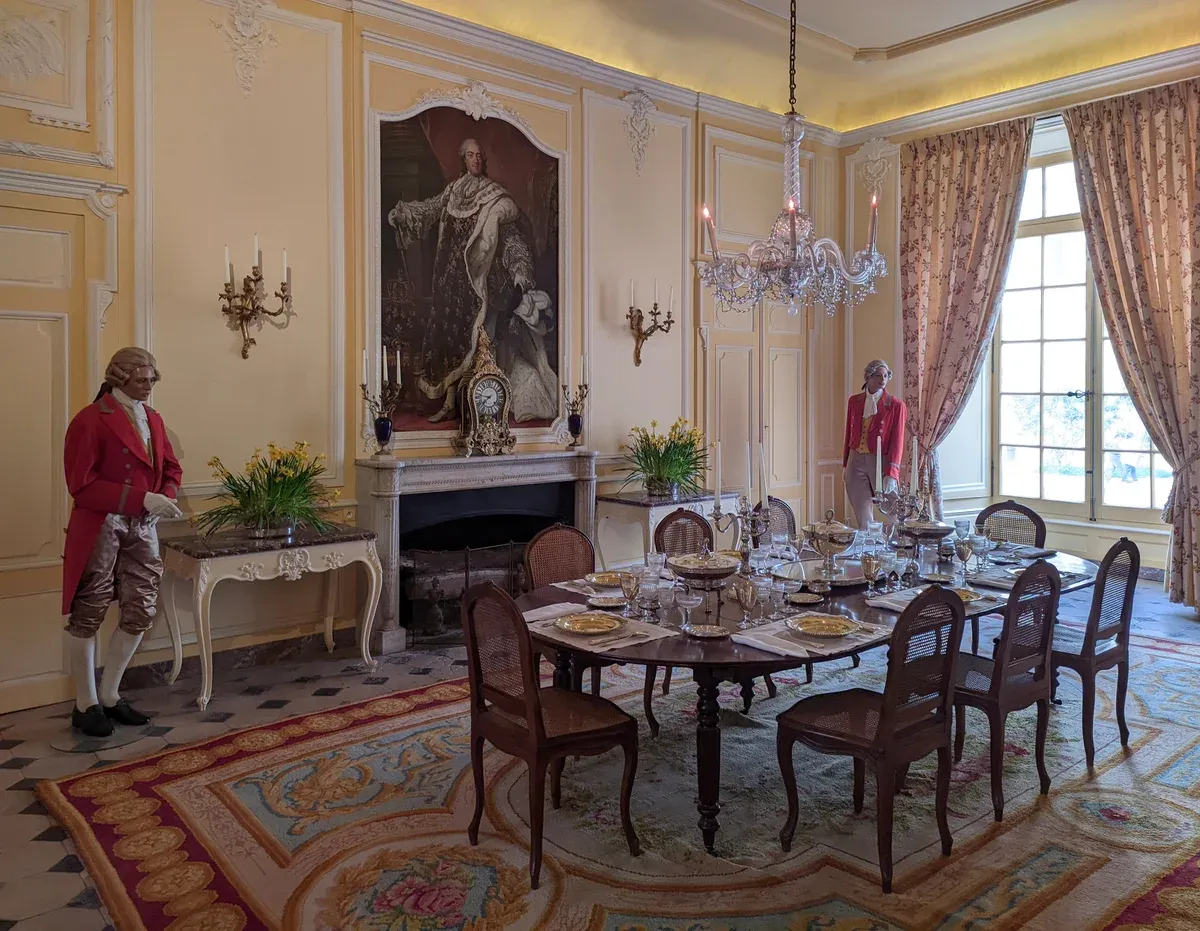
The dining room at Ussé set for a meal, with period costumed figures by the fireplace. Photo: JackyM59, CC BY-SA 4.0, via Wikimedia Commons
Seasons at Ussé and Pairing It with Neighbours
Opening times shift three times a year, and Ussé sits close enough to Azay-le-Rideau and Villandry to combine.
Where the Three Sit
Azay-le-Rideau lies on the D751 off the A85 from Tours, and Villandry is 20 minutes by car from Tours via the D7 with free parking. A distance from either neighbour to Ussé is not stated, so check a map before setting out. The Loire Valley castles guide sets out the full set of chateaux in the area, and the Villandry and Azay-le-Rideau Half-Day Tour covers both neighbours for $131.
| Site | Season | Daily hours |
|---|---|---|
| Ussé | 14 February to 1 November | 10:00-18:00, until 19:00 from 1 April to 20 September |
| Azay-le-Rideau | All year, closed 1 Jan, 1 May, 25 Dec | 9:30-18:00, 9:30-19:00 July and August, 10:00-17:15 Oct-Mar |
| Villandry château | 7 February to 11 November | Not stated |
| Villandry gardens | All year, closed 25 December | Not stated |
Questions About the Château D'Ussé
Is the Château d'Ussé the Sleeping Beauty castle?
The link is traditional rather than documented: Perrault is said to have had Ussé in mind for the Sleeping Beauty tale. The castle embraces the story most openly in the dungeon, where the sentry walk carries scenes from the tale. The rest of this guide covers the castle and its surroundings.
Who owns the Château d'Ussé?
Ussé belongs to the Blacas family, and the Duke of Blacas and his family still live there. It is a private home open to visitors, which is why the visit is self-guided.
How much do tickets for the Château d'Ussé cost?
Adults pay €14.50, children aged 8 to 16 pay €7.50 and children under 8 enter free. Groups of 20 adults or more pay €11.50 per person, and the optional Wivisites app guide costs €2.
When is the Château d'Ussé open?
The season runs 14 February to 1 November. Hours are 10:00 to 18:00 until 31 March, 10:00 to 19:00 from 1 April to 20 September, and 10:00 to 18:00 after that, with last tickets one hour before closing. Plan arrival times with the table in the visiting section.
Is there a guided tour of the Château d'Ussé?
No, the castle offers no guided tours. The visit is self-guided, with an optional app guide on Wivisites at €2 and printed sheets in nine languages. If you want a live guide nearby, the Villandry and Azay-le-Rideau half-day tour from Tours includes guided visits to both neighbouring chateaux.
Is there a restaurant at the Château d'Ussé?
No, the estate has no on-site restaurant, so plan lunch in the surrounding villages. Nearby Villandry does have a restaurant and tea room at its entrance, La Doulce Terrasse, which is one reason the two visits pair well on the same day by car.
What is the difference between a château and a castle?
Ussé shows the shift from one to the other: it began around the year 1000 as a stronghold built by Gelduin I on the edge of the Chinon forest. It was altered in the 15th century by Jean V de Bueil, and a pavilion was added in the 17th century to mark the marriage of Vauban's daughter and the Marquis de Valentinay.